
MISSILES ON THE MENU
Feel safe - die hungry

It’s just an idle idea that’s unlikely to come to pass, particularly under the present president: A visiting head of state bringing deals that won’t kill.
On his recent visit to Indonesia, Indian PM Narendra Modi carried a catalogue of goods he knew would appeal to the tastes of his mock-military host
President Prabowo Subianto – guns, not butter.
No life enhancers on the list like robotic surgery platforms, electrosurgical generators, in-vitro diagnostic devices and other health and lab gear. These devices and machines have been invented and built to find out what’s hurting, cure the wretched diseases, hasten recovery and help doctors be more effective
In brief, to make the world a better place for those stricken with pain and its accompanying misery. What could be a finer calling for those with the wills and skills?
According to its investor spruikers, “India is one of the world’s leading innovators in medical technology. The size of the Indian medical devices sector is estimated to be around $14 billion and it is expected to grow to $30 billion by 2030.”
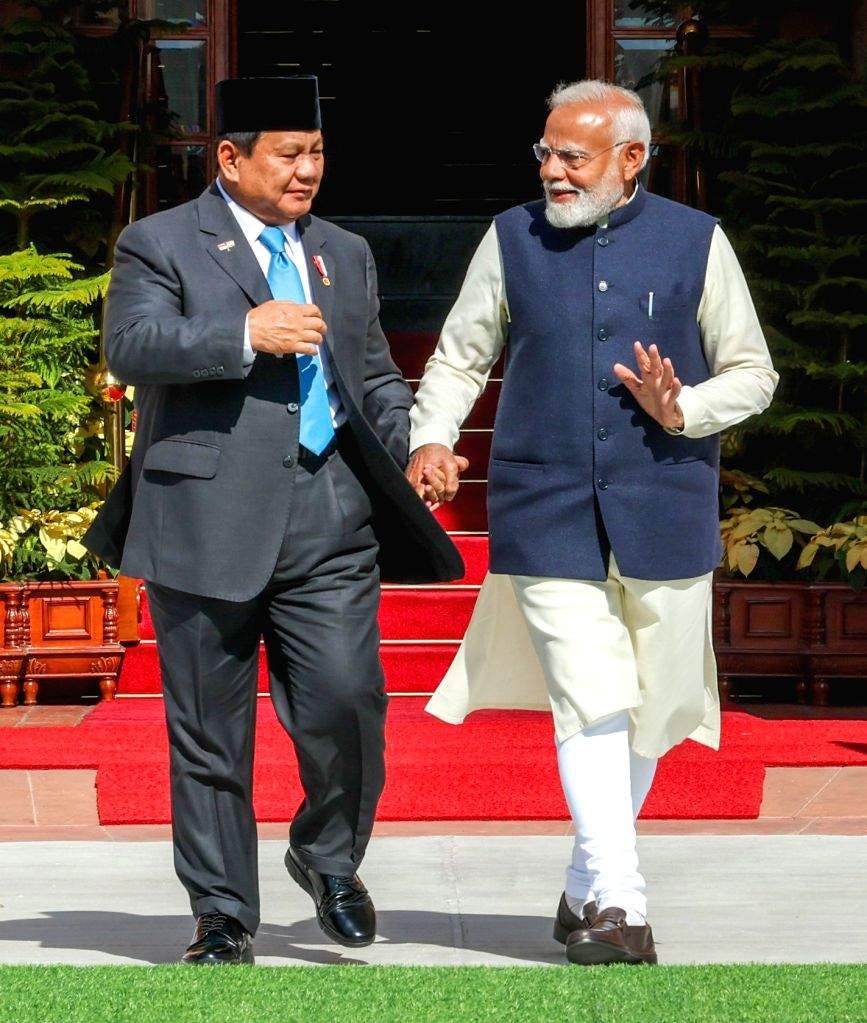
Through Modi’s visit his customer will be better armed and briefly able to defend itself against the enemies of the government’s imagination. This is probably China, though few politicians say so aloud.
Any conflict would be uneven; the People’s Republic is five times larger than Indonesia in land size and population – and bristling with the latest, biggest and most powerful weapons already sowing fear in the Pacific.
There hasn’t been much hoopla about the Modi deal, perhaps to avoid curios journos reviving the many massacres, communal riots, targeted attacks, and spontaneous assaults.
The last major outbreak of violence took more than 1,000 lives – mostly Muslims.
Another reason would have been arousing critics of the spending like Dr Titik Anas from Padjadjaran University in Bandung, West Java. During the reign of President Joko ‘Jokowi’ Widodo she was a special advisor to the Minister of Finance. She fears the economy is heading downhill:
“Indonesia’s capital outflows, weakening currency and rising borrowing costs are symptoms of a deeper policy problem.
“Since Prabowo entered office in late 2024, fiscal and monetary policy have been operating out of sync, weakening investor confidence and amplifying economic vulnerabilities.”
Her comments preceded the President opening the Modi order books for what old soldiers and small children like best – things that go bang.
Reuters news agency reported that “New Delhi will supply BrahMos supersonic cruise missiles and Astra air-to-air missiles to Indonesia in a deal estimated at around US $630 million.”
We don’t know how many missiles Jakarta will get for its rupiah; the deal is packed in Styrofoam secrecy for no reason other than bureaucrats fearing to open their mouths anywhere near a journo and a microphone because an explosion could damage their careers.
However, it’s reported elsewhere that each BrahMos will cost up to US$ 5 million, and the Astras about a fifth of that price.
Altogether that could feed a lot of kiddies through the Makan Bergizi Gratis (free nutritious food) programme that’s just been hit with a 20 per cent budget cut after alleged mismanagement and corruption
The armaments that have been developed with Russia, are supposed to be the “world’s fastest operational supersonic cruise missiles, capable of speeds up to Mach 2.8.” They can be launched from land, sea, sub-sea, and air platforms and have a range of 450 km carrying a conventional warhead of up to 300 kg.
The weapons are already in the armouries of India, Vietnam and the Philippines.
To be fair Madi did have some goodies in his khurta - the rehabilitation of 200 small shrines at the 9th century Hindu Prambanan temple complex in Central Java. No mention of budget.
Madi, 75, was born the son of a railway station tea seller. Now he’s PM of the world’s most populous country (1.47 billion, including 200 million Muslims).
He was last in the Republic in 2023 for the G20 Summit held in Bali where the Indian leader would have felt most at home; the island’s residents are mainly Hindu, the faith followed by Modi.
The religion came with traders and priests to what is now Indonesia more than 2,000 years ago, centuries before Islam and Christianity. Buddhism, also from India, arrived about 200 years after Hinduism and the two religions seemed to live in harmony.
Prior to PM Modi’s arrival The Jakarta Post editorialised that “The relationship between India and Indonesia has suffered from strategic caution, a tendency to drift into parallel diplomatic orbits rather than actively combining forces to shape global policy.”
Neither government disclosed further details. Reuters cited an Indian government official saying that New Delhi will supply BrahMos supersonic cruise missiles and Astra air-to-air missiles to Indonesia in a deal estimated at around US$630 million (S$814 million
Moti, the son of a railway station tea seller, runs the world’s most populous country (1.47 billion, including 200 million Muslims).
He was last in the Republic in 2022 for the G20 Summit held in Bali where the Indian leader would have felt most at home, for its residents are mainly Hindu, the faith followed by Modi.
The religion came to what is now Indonesia more than 2,000 years ago with traders and priests, centuries before Islam and Christianity. Buddhism, also from India, arrived about 200 years after Hinduism and the two religions seemed to live in harmony.
Now 75, he’s been involved in nationalist politics since he was in primary school, first with the Rashtriya Swayamsevak Sangh, a right-wing Hindutva paramilitary volunteer organisation, then the Bharatiya Janata Party.
The phrase ‘guns and butter’ is outdated, but when popular mid last century it was an economic metaphor representing the trade-off a country faces when choosing between military defence (”guns”) and civilian programmes or living standards (”butter,” such as food, healthcare, and education).
Can Indonesia have both?
##